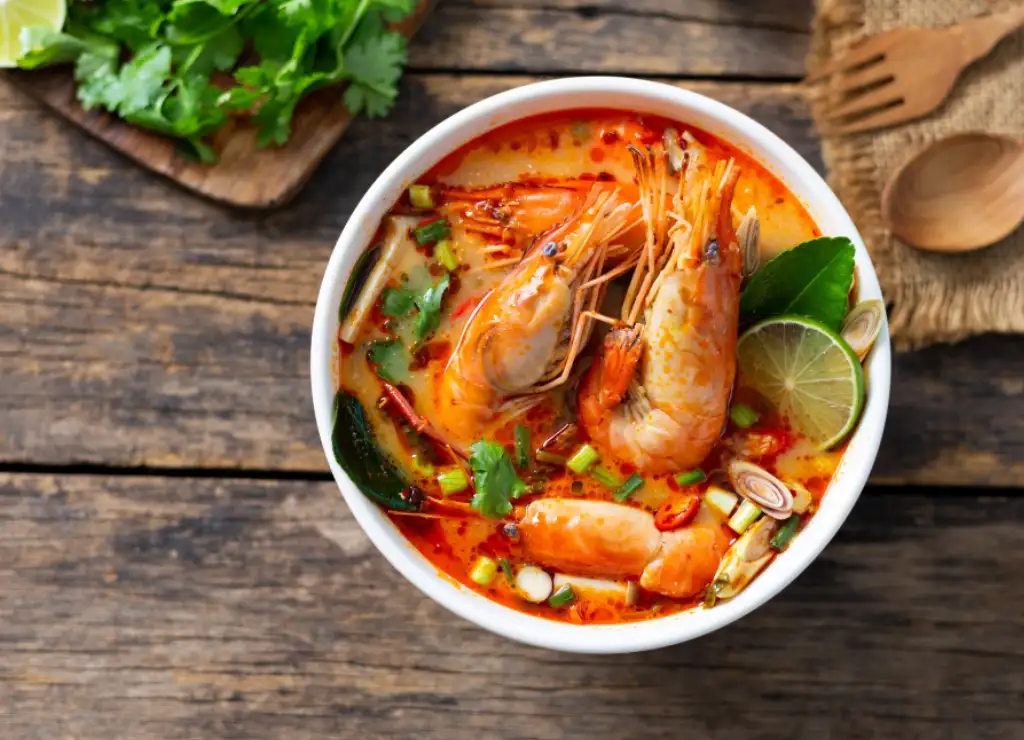
The steam rises, carrying the punchy aroma of lemongrass, lime, and chili — a sensory invitation you can’t ignore. Tom Yum Kung, Thailand’s iconic spicy and sour shrimp soup, is a flavor-packed story that’s taken the world by storm. From the sizzling street stalls of Bangkok to the elevated plates at a Thai fine dining in Bangkok, this bowl delivers Thailand’s culinary soul in every spoonful – fiery, tangy, salty, and sweet, all in perfect balance. Each spoonful tells a story of riverside communities, ancient wisdom, and the artistic mastery that defines Thai cuisine.
Origins And Cultural Legacy
The story of Tom Yum Kung begins centuries ago during Thailand’s Rattanakosin era. During King Rama V’s reign, a version called “Tom Yum Pla” (the fish variant) was documented, while the beloved shrimp version emerged later within royal cuisine before evolving into the dish we know today. The name itself comes from “tom” (to boil) and “yum” (mixing of ingredients), perfectly describing the cooking method that brings these flavors together.
In a monumental recognition of its cultural significance, Tom Yum Kung was inscribed on UNESCO’s Representative List of the Intangible Cultural Heritage of Humanity in 2024. This prestigious honor acknowledges the soup not just as food, but as a living tradition that embodies Thai Buddhist values and traditional knowledge of local environments and resources. The dish reflects the wisdom of riverside communities in Central Thailand, who developed this recipe by combining their preference for naturally abundant freshwater prawns with their deep understanding of medicinal herbs.
Why It’s So Popular
The secret behind Tom Yum Kung’s universal appeal is in its iconic “Tom Yum trinity” – lemongrass, galangal, and kaffir lime leaves – which creates an unforgettable flavor profile cherished throughout Thailand and beyond. Other than providing a zingy taste, these aromatic herbs also offer health benefits that have been recognized for generations, making the soup both delicious and nourishing.
What makes this dish truly special is its remarkable accessibility. You can find Tom Yum Kung being prepared by street vendors using portable burners, simmering in home kitchens across Thailand, and elevated to artistic heights in upscale restaurants. The soup has even inspired fusion dishes worldwide, proving its adaptability while maintaining its essential character. This versatility has helped Tom Yum Kung become one of the most recognizable Thai dishes globally, serving as an ambassador for Thai cuisine.
A Simple Tom Yum Kung Recipe
For those curious about how to make Tom Yum Kung at home, here’s a quick and easy recipe. Perfect for beginners, this version balances authentic flavors with simple preparation steps.
Tom Yum Kung Ingredients:
- 1 lb fresh shrimp (prawns), peeled and deveined
- 3-4 stalks lemongrass, cut into 2-inch pieces and bruised
- 3-4 slices fresh galangal
- 6-8 kaffir lime leaves, torn
- 3-5 Thai bird chilies (adjust to taste)
- 8 oz mushrooms (straw or shiitake), halved
- 3-4 tablespoons fish sauce
- 3-4 tablespoons fresh lime juice
- 2 tablespoons nam prik pao (Thai chili paste) – optional
- 3 tablespoons evaporated milk (for creamy version) – optional
- 4 cups chicken or vegetable broth
- Fresh cilantro for garnish
Here’s how to cook Tom Yum Kung:
- Bring the broth to a boil in a medium pot and add lemongrass, galangal, and kaffir lime leaves. Let it simmer for 5 minutes to release the aromatic oils.
- Add the shrimp and mushrooms to the fragrant broth. Simmer for 2-3 minutes until the shrimp turn pink and are just cooked through.
- Season with fish sauce and lime juice, adjusting the seasoning to achieve the perfect balance of salty and sour flavors.
- How to cook Tom Yum Kung for different styles: For the clear version (nam sai), add Thai chilies now. For the creamy version (nam khon), stir in evaporated milk and nam prik pao.
- Remove from the heat and garnish generously with fresh cilantro. Serve immediately with steamed jasmine rice.
Enjoy An Elevated Experience At R-HAAN In Bangkok
There’s joy in cooking at home, but when it comes to savoring Tom Yum Kung at its finest, we at R-HAAN promise a culinary experience like no other. As a two-Michelin-starred Thai fine dining restaurant in Bangkok, under the vision of our acclaimed Chef Chumpol Jangprai, we celebrate Thailand’s rich culinary heritage while introducing innovative techniques that elevate every dish. Chef Chumpol’s passion for revitalizing traditional Thai flavors and transforming them into contemporary creations has made R-HAAN a destination loved by food enthusiasts worldwide.
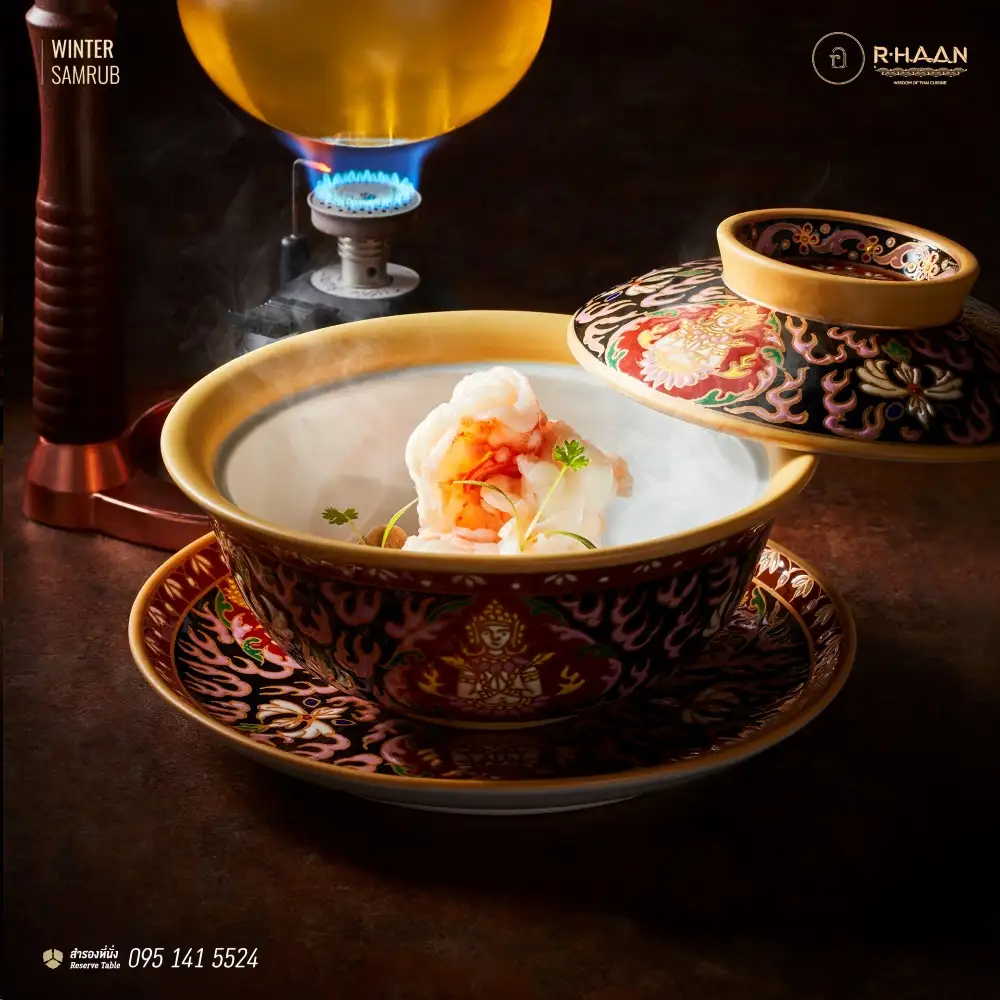
At R-HAAN, our Tom Yum Kung is a curated experience. Featuring plump, juicy river prawns and an aromatic, tangy broth, we make this beloved soup into a Michelin-worthy experience while staying true to its roots. Following our guiding philosophy of the “Wisdom of Thai Cuisine,” we carefully source the freshest local ingredients and present our dishes in the ceremonial Samrub style, a dining tradition once reserved for royalty. Every bowl celebrates the legacy of Thai cuisine, balancing heritage and innovation to create an unforgettable dining experience.
Come Taste the Tradition
Tom Yum Kung carries the essence of Thai culture, combining rich history, local traditions, and perfectly balanced flavors in every bowl. You might enjoy learning how to cook Tom Yum Kung at home or seek out its bold, tangy, spicy, and aromatic notes when traveling through Thailand. In Bangkok, R-HAAN offers a beautifully reimagined version of this timeless dish, where traditional techniques merge with contemporary artistry.
From street-side bowls to Michelin-starred presentations, Tom Yum Kung continues to evolve while staying true to its roots, proving that the best dishes are those that honor the past while embracing the future. Contact R-HAAN today to reserve your table.
References:
- UNESCO. (n.d.). Tom yum kung. UNESCO Intangible Cultural Heritage. Retrieved September 1, 2025, from https://ich.unesco.org/en/RL/tomyum-kung-01879
- Bangkok Post. (2024, May 1). UNESCO lists tom yum kung as humanity’s intangible cultural heritage. Retrieved September 1, 2025, from https://www.bangkokpost.com/thailand/general/2913882/unesco-lists-tom-yum-kung-as-humanitys-intangible-cultural-heritage
- The Nation Thailand. (2024, May 2). UNESCO recognition for tom yum kung boosts Thai cultural pride. Retrieved September 1, 2025, from https://www.nationthailand.com/life/art-culture/40043846
- MICHELIN Guide Thailand. (2020, February 11). MICHELIN Star Revelation Thailand 2020: Interview with Chef Chumpol Jangprai of R-Haan. Retrieved September 1, 2025, from https://guide.michelin.com/th/en/article/people/michelin-star-revelation-thailand-2020-interview-chef-chumpol-jangprai-r-haan